“I’ve got some feedback for you”. “Let’s discuss how that meeting went.” For most people, the prospect of being on the receiving end of feedback at work is a cause for anxiety. Why? Because, for many, the way feedback is often presented can provoke feelings of being under threat, whether that’s real or imagined.
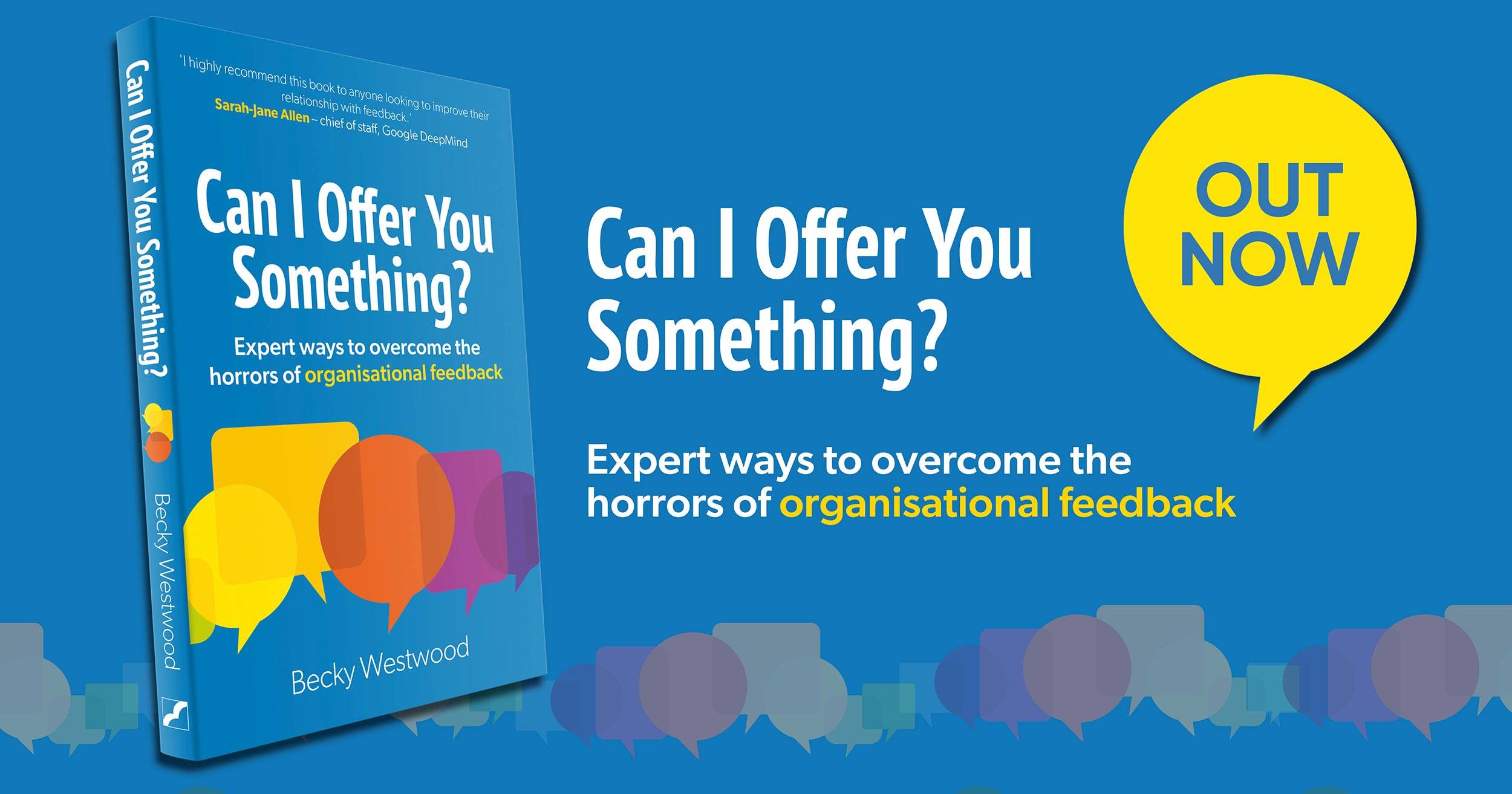
I’ve spent much of my career working with people who experience social anxiety, and one of the common things that came up for them was how difficult they found feedback. I was curious about how their experiences compared to the experiences of those without social anxiety when giving and receiving feedback. This is one of the reasons I began my research into feedback, I wanted to find a better way for both those who receive it – and those who give it. And that’s why I wrote my book ‘Can I Offer You Something?’
The book gets right to the heart of feedback dynamics and sets out to overcome the horrors of organisational feedback. In order to offer some new perspectives, I first needed to research what people are experiencing at work, and why they feel the way they do.
Gaining fresh insights
Existing research has already identified some of the problems caused by the way feedback can be given, especially when it’s seen as a ‘have to be done’ in what is often an annual review. There are many studies that show the pitfalls when a less than satisfactory experience is delivered. For example, Kluger and DeNisi (1996) highlighted that feedback delivered poorly and ‘just because’ can lead to decreases in performance.
This anxiety isn’t just felt by the recipients. Managers and leaders can feel anxious too, especially when the pressure is on to recall the work they are giving feedback about. And, as my research found, managers and leaders may not have had the benefit of feedback themselves. So, it’s perhaps no wonder why anxiety is rife on all sides. In conducting my own research for the book, what could I add to the understanding?
My research studies
Existing studies have typically been experimental and quantitative, focused on one element of the experience: such as the effects of different types of feedback, the source of the feedback, its structure, how it’s delivered and beyond. I wanted to build on this by understanding the real-life experiences of people with social anxiety when it comes to feedback in the workplace.
‘Can I Offer You Something?’ draws upon my own academic research. I conducted my first study with people aged between 28 and 36, as this could be a realistic time frame when symptoms and experiences with social anxiety peak. I also studied those who interacted with feedback but didn’t necessarily have a diagnosis of anxiety. I was curious to see how their experiences would compare to those in the first research.
The people who participated in both studies came from a range of professional backgrounds including public sector, law, operations, research, project management and engineering. They were working in roles across Europe, the US, UK and Asia and at different levels of their organisations from experienced senior leaders to those earlier on in their careers.
What I discovered about anxiety
The most surprising finding from the research with those who experienced anxiety was that 100 per cent of people knew how feedback could be best delivered to them – what would be most helpful to minimise their anxiety. However, when asked if they’d shared these preferences with colleagues, a manager or a leader, 100 per cent of them said ‘no’. The main reason given for this was concern about how they could share these preferences without admitting that they experienced anxiety.
These response rates were mirrored in my second study and my findings confirmed just how big a problem the very mention of feedback could be. I heard stories of people whose anxiety started the moment they received the invitation to the feedback meeting and stayed with them long after the meeting had finished; stories of people experiencing physical symptoms such as migraines that kept them off work; and moments when people felt so preoccupied by the expectation of what was about to happen that it obstructed their ability to concentrate or make decisions in their roles.
In many cases, people didn’t feel as if they could talk about their anxiety at work. But, on a more upbeat note, participants also had positive experiences with feedback and valued it when it was done well, in a timely way and with care and consideration. They talked about investing in their development, a desire to get better at what they were doing and being able to perform in a sustainable way.
Some real-life experiences
Perhaps you can identify with some of these feedback comments? Many more are featured in the book.
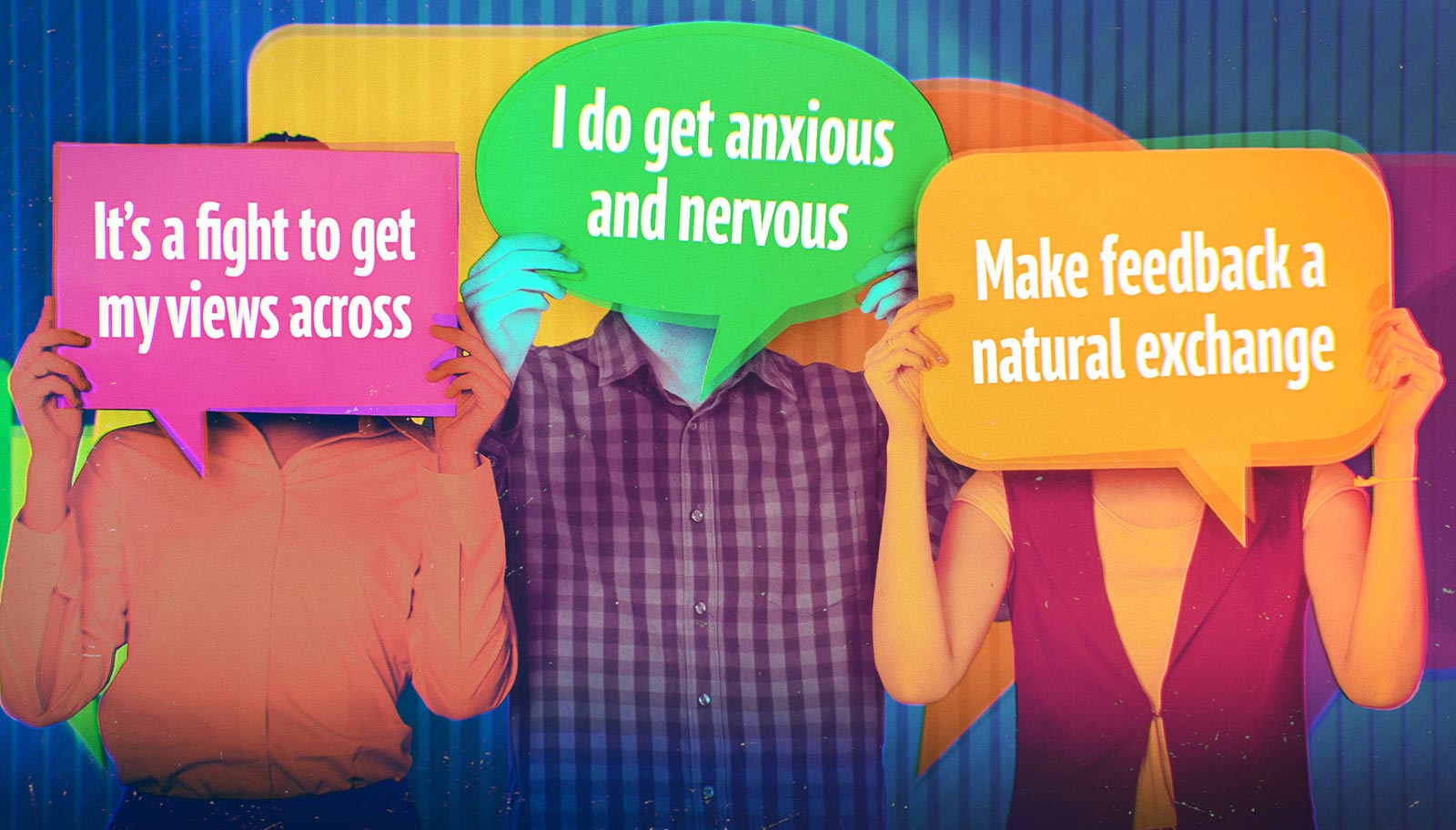
“Annual feedback felt like the only opportunity to share, so both parties would “fight” to get their view across and agreed. It didn’t feel productive or particularly inspiring.’
“I find it un-useful when it’s the time of year where everyone puts in feedback but it’s overly “nice” just so they get good comments back. It makes the entire process pointless as minimal growth can come from it.’
“I do get anxious, nervous, but I try to ignore that and just give them what they want, and do it the way they want.”
“Ask employees what they want or need and find useful, rather than doling out unsolicited feedback based on an agreed process.”
And perhaps the ideal outcome that will resonate with everyone… “Make giving feedback a natural exchange between employees.”
Overall research themes
While these perhaps show some of the challenges of the feedback process, they also suggest areas that organisations can work on to improve the way feedback is given.
Relational not transactional: The participants talked about their aspiration for feedback to be based around human connection first. They described the significance of interaction, having a chance to talk, time to reflect and experiencing something based on their preferences rather than a prescribed process. Ultimately, they wanted it to just be two humans having a conversation.
Managing the physiological effects of anxiety: Participants wanted to exchange feedback and at the same time they didn’t want to disclose their anxiety. Instead, they chose to use different techniques and practices to manage their state before, during and after. Overwhelm could cause them to either delay or avoid what they perceived to be difficult conversations to reduce psychological pressure.
The challenge of language and ambiguity: People found ambiguous or ‘fluffy’ language used by others particularly difficult as they couldn’t always get the point of what was being said or asked. This often led them to fill in the gaps and reach unhelpful conclusions or assumptions – usually that they were in serious trouble or had upset someone else.
These themes are explored in more detail throughout the book, with practical tools and strategies to use for yourself and others.
In conclusion
I hope that by taking findings from research that looks at the real-life experiences of people with and without anxiety, you can build your understanding of this anxiety and make the whole process of exchanging feedback more straightforward and purposeful. Feedback doesn’t need to be a cause for anxiety, it’s really a very human act, an exchange of perspectives.
Discover ‘Can I Offer You Something?’
‘Can I Offer You Something?’ is all about overcoming the horrors of organisational feedback. You can order your copy from the publisher’s website here or from Amazon UK here.