
Receiving feedback at work is the curse…no sorry gift… that comes hand in hand with working in organisations. Whilst some people relish those feedback conversations, for many of us the word feedback fills us with anxiety and dread.
During the research studies for my new book, “Can I Offer You Something?’ participants shared personal experiences about how they receive feedback which led to the creation of a number of ‘Feedback Myths’; things that are commonly believed about feedback, but in reality, do not stand up to scrutiny. If you believe these myths and act as if they are true, it could be hurting your career.
Let’s have a look at a few of them and consider how you can move beyond the myth to use feedback in a way that will supercharge your career prospects.
Myth – Feedback is a call to action
Many people leave feedback conversations believing they need to act on all of it. Feedback should be about inspiring choice in the person receiving it. Feedback is basically a perspective on something, and you can choose what to do next without being penalised. If you view it as a perspective, you take it less personally and also are able to consider whether you should or shouldn’t do anything with it, and the potential consequences of doing so. It puts you as the receiver in charge of your own development or growth. Not sure whether it’s a directive disguised as feedback? Ask. You can check by saying something like ‘I just want to clarify what you’ve just said, is this an instruction or a suggestion for my own development?’.
Myth – ‘Critical’ feedback is the most useful
Too often in organisations the result of this myth playing out is that people start to ignore any feedback that relates to strengths or things they’ve done well, bracing only for the criticism. In organisations this leads to people dwelling on their perceived weaknesses rather than building on their strengths.
Train yourself to listen out for the positive comments people make, thank them and ask them to explain what specifically they think you did well. Use it as a learning experience. This will help you to build your strengths even more and these are likely to become your key talents, more so that trying to correct every weakness.
Myth – ‘Feedback should come from the top
Feedback from managers is just one perspective and if you over index on this one source, you risk hurting your career by tailoring your style too narrowly. Managers change all the time, the next one could see things very differently, so it’s best to get a holistic overview of how you are perceived, rather than try too hard to please one person or group of people.
Leveraging diverse insights into behaviours, actions and performance might be the difference that makes the difference when it comes to achieving your professional goals and targets. Start by considering who or what are your sources of feedback and how can you look beyond your managers for valuable perspectives.
When it comes to having a successful career, other peoples’ professional perspectives really is a gift if given and received well. To use feedback to its highest potential, let go of some of the widely accepted myths and get feedback to work for you.
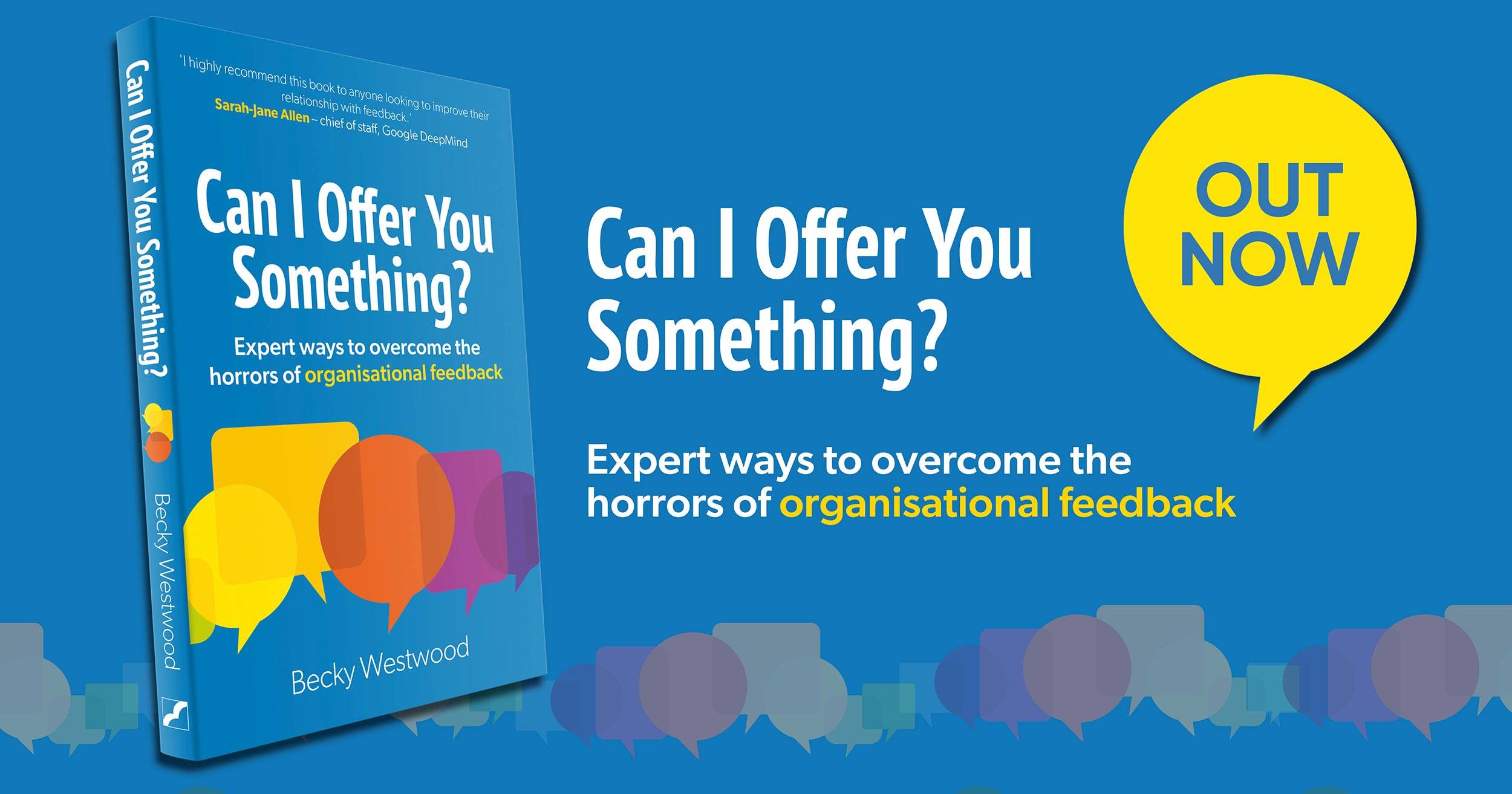
Discover ‘Can I Offer You Something?’
‘Can I Offer You Something?’ is all about overcoming the horrors of organisational feedback. You can order your copy from the publisher’s website here or from Amazon UK here.