When client emergencies, overrunning meetings, and time-zone shifts routinely disrupt your schedule, maintaining healthy habits can feel impossible.
We often treat habit-building as an all-or-nothing pursuit: the myth of the pristine 5 a.m. workout, the perfectly prepped meal plan, and uninterrupted daily meditation. But when unpredictability is your core reality, applying a rigid framework to your personal wellbeing can lead to frustration and guilt.
To achieve sustainable outcomes, we need to abandon the ideal of the hyper-disciplined executive operating on clockwork routines. Instead, it’s helpful to shift to a fluid, adaptive model that works with your chaotic reality rather than against it.
Before introducing new strategies, audit how your current mindset responds to disruption:
- Notice where perfectionism stalls progress: Are you abandoning habits entirely if you can’t execute them “properly”? (e.g., skipping movement altogether because you don’t have a full hour).
- Track your emotional response to disruption: When an urgent task hijacks your afternoon, do you write the entire day off, or do you pivot to a smaller form of self-care?
- Recognise the flaw in fixed time slots: Relying solely on the clock sets you up for failure. Meditating at 8 a.m. every day inevitably falls apart the moment an urgent call gets booked over that slot.
To build habits that actually survive a chaotic workday, consider trading time-based rigidity for these adaptive strategies:
- Be ruthless in prioritising. Do not plan to adopt all the good habits all at once. What is the smallest habit that would make the biggest impact on your quality of life and wellbeing? Or, if you already have pretty good habits, which one will become your non-negotiable.
- Agree on a minimum viable proposition and use if / then planning. On those days when you can’t workout for 45 minutes today, what would be “good enough”? Anticipate the unpredictability by creating flexible backup options. “If I can’t exercise after work, then I will do a 10 minute mobility routine or only take the stairs for the day”. This allows you to maintain momentum without requiring large blocks of time.
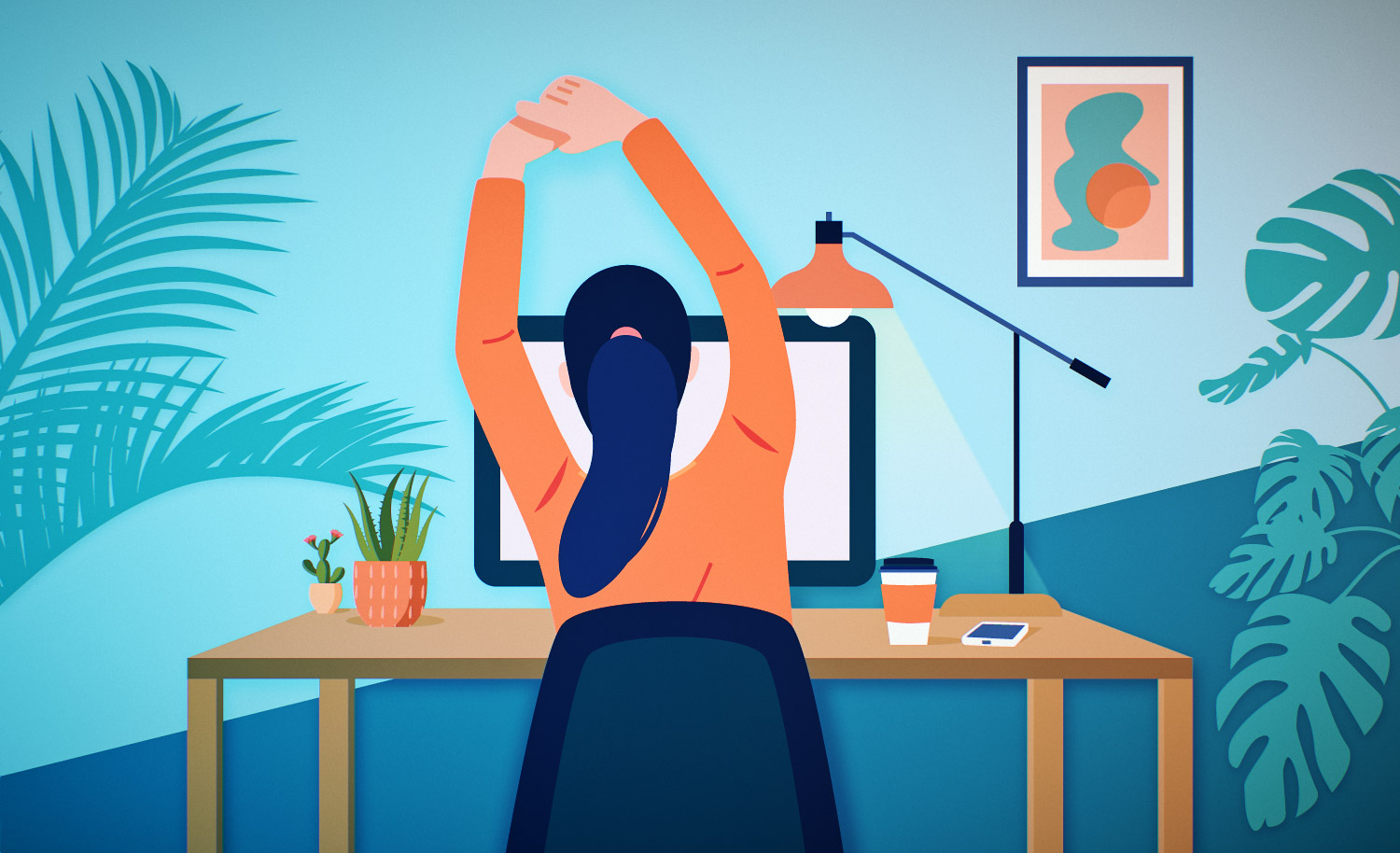
- Anchor habits to events rather than time. Tie your healthy habit to an action that happens regardless of how busy you are. Try stretching right after you close your laptop, taking three conscious breaths every time you press “join meeting”, or pouring a glass of water every time you make a hot drink.
- Redefine what consistency looks like. Consistency isn’t doing the exact same thing at the exact same time every week. It’s making small choices, repeatedly, to support your physical and mental wellbeing whatever the day has in store for you.
By letting go of rigid expectations and building adaptability into your day, you create a foundation for long term health and resilience that withstands even the most unpredictable of the working weeks.