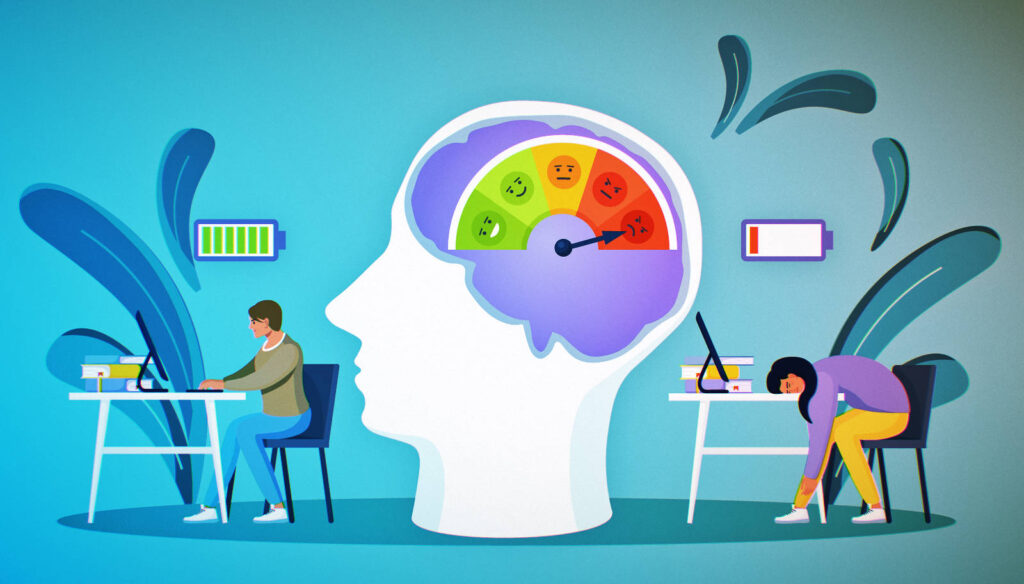
Burnout can gradually creep up on those it affects – which makes it so hard to identify. You feel like you are in control, despite the pressure. And then one day you’re not OK. Does this sound familiar? You are certainly not alone.
A ‘Google’ search on burnout shows us that between 50 to nearly 80% of UK workers have experienced burnout. Is it too extreme to call what’s happening with burnout an epidemic? I don’t think so.
Burnout has a much higher profile as a result of the pandemic. Nearly every week a leader, politician or celebrity opens up about feeling burnt out. The reality is that many of us are probably working with burnout ourselves or know a colleague who is suffering – even if they won’t acknowledge it.
By the end of this article I hope you’ll have a greater understanding of burnout and a sense of hope that it doesn’t mean the end of your career. I share tips for both individuals and organisations to both prevent and mitigate burnout.
My personal perspective
I first became interested in burnout through my earlier clinical practitioner role as a psychotherapist. I saw clients suffer through burnout with some having to leave their jobs, I have also experienced it myself. Having this personal experience has always made researching the topic so meaningful.
The burnout challenge
Organisations need their people to be productive and innovative if they are to create competitive advantage. But increasingly, and the NHS is a timely example, there are those on the frontline just managing to hold things together as backlogs grow. And here’s the paradox. The very people so necessary to deliver are the same ones who are increasingly finding themselves suffering from burnout with all the damage it can do to performance – and much more in the long term.
The same applies to leaders with their often exhausting list of expectations. It’s no surprise, then, that burnout rates in leadership are reaching alarming levels. This is why managing burnout is one of the most important challenges organisations have to get right. Not only is this bad for employee health and wellbeing, it’s not a sustainable way to run any organisation.
Many of us are working with increasingly blurred boundaries affecting work-life balance. Hybrid working is now a choice of many, but it only adds to the risk. People are working longer hours, often unseen by their managers. We are in an ‘always on’ society, never really switching off and when we finally try, the stimulus of the devices we’ve been using prevents us from getting to sleep.
What causes burnout?
The causes of burnout aren’t just about work – but that hasn’t stopped the World Health Organisation defining it as being caused by “chronic workplace stress that has not been successfully managed”. It is, says WHO, an “occupational phenomenon”.
From my perspective I see three main elements to it. As I’ve said, there’s a gradual build up that causes burnout. This means that you may be experiencing some or all of these. You could also be accepting this as part of the role you do or the life you lead.
Emotional exhaustion: This is both a psychological and a physical condition that some have described as feeling ‘tired in their bones’. When she recently resigned as New Zealand’s PM, Jacinda Ardern referred to ‘having nothing left in the tank’. This may be a similar feeling.
Depersonalisation: This comes from how you react to the emotional exhaustion. Often people become more distant from their work, less emotionally invested because they can’t cope with it. They may even start to hate a job they once loved or feel cynical about their colleagues, clients or peers.
Lack of personal achievement: You don’t feel like you are getting anywhere but you keep going. Even when other people think you are achieving – you don’t feel it. Have you ever delivered a big project that didn’t seem to matter to you? Burnout could explain feelings like this.
When people feel any or all of these, they are fairly burnt out and need to do something about it.
Spotting the signs
The most obvious place to start is to look out for the signs – something that line managers in particular need to be aware of. People experiencing burnout are often in denial of the problem, so it takes others to spot the signs to be able to help or suggest that help is sought.
Burnout can be evidenced by a lack of energy, the compulsion to work a lot (even if it’s not urgent or critical), a decline in productivity, displays of impatience and being overly critical of others. Another sign can be indifference shown to work, even when things appear to have gone well.
The myths around burnout
Like any topic that’s not easy to spot or may be shrouded in mystery, myths emerge. Here are two to unpack.
You have to leave your job: There can be a negative spiral from burnout which can end with leaving a role. I feel very strongly about this having researched it in partnership with Coventry University. I’ve seen really talented people feel they need to take less demanding work which isn’t so fulfilling. It doesn’t have to be this way. There are strategies for recovery as covered in more depth in this Monkey Puzzle blog:
Can you recover from burnout without leaving your job?
It’s about time management or long hours: These are probably less of a contributor than many people think. It’s about the emotional ‘cost’ of your work. This can be a combination of individual factors and organisational cultural factors.
Burnout prevention and mitigation tips
For individuals:
Get to know your own rhythm: This sounds quite simple, but it may be harder than you think. Participants in my study found that learning to listen to their body and finding self care routines that worked for them were an important part of their recovery. So, ask yourself when do you work at your best, is there a time of day that’s best to do your hardest work, when and how often do you need to rest, how is it best for you to exercise and what type? Really learn about how you can operate at your best. If you can do this, it’s probably going to be your best burnout prevention tool.
Maintain broad interests / social connection: Positive relationships with friends and family can provide support and a sense of connection, which can help to prevent burnout. People who I’ve researched who stayed in demanding roles while suffering from burnout tended to have quite wide social interests, with lots of connections or hobbies, voluntary work or second jobs. Something that’s completely separate from their main job can be a mitigator against burnout in both prevention and helping to recover.
Set boundaries: Learn to say “no” to non-essential tasks and obligations and make time for activities that you enjoy. Of course, actually doing this may not be so easy, especially in the workplace. We all want to be seen as productive but agreeing to do more may send a signal that causes people to not respect your time or take up too much of it.
This blog will help you gain more control over your time and the factors affecting burnout.
Are these Magnificent Seven Time Wasters fuelling your burnout?
For teams / organisations:
Leaders: Although there is now more openness around mental health, burnout still carries some stigma, which is where leaders and the example they set and language they use, can help. Without an open dialogue about mental health and leadership support, burnout and the issues surrounding it won’t get the attention it needs to be tackled.
Line managers: Be aware of the signs in others. People experiencing burnout are often in denial of the problem, so it takes others to spot the signs to be able to help, or suggest that help is sought. So, check in with your teams and how absorbed they are in their work – and plan work as a team which gives everyone an opportunity to feel engaged.
Embed wellbeing into your organisation: Instead of making wellbeing a separate issue or initiative, employers should integrate ways to embed employee wellbeing into core workplace programmes. Almost all development programmes could have a wellbeing aspect that addresses burnout, especially line manager and leadership training.
Conclusion
Burnout is complex, difficult to identify in ourselves and others and often denied. But failure to address burnout and support people through it is a wasted opportunity. It can be managed, recovery is possible. Successfully addressing the problem now will have a long-lasting positive impact on retention, productivity and in shaping a more human workplace.
Watch ‘The Burnout Epidemic’
If you’ve found this article of help, I cover some of the key themes in a short video available on the Monkey Puzzle video page.