
For years, organisations rewarded leaders for intelligence. The ability to think strategically, solve problems quickly, master complexity and build expertise.
In many workplaces, success came from being the smartest person in the room. And for a long time, that worked.
Leaders were often promoted solely because of specialist knowledge and an ability to execute at pace. All of which remain key, however, hybrid work has exposed a leadership gap many organisations can no longer ignore: High IQ alone is no longer enough.
The context of work has changed and leadership needs to evolve with it.
Why traditional leadership worked for so long
For decades, workplaces were largely designed around proximity.
Teams were co-located. Learning happened through observation and managers could read the room, notice changes in energy, and build relationships through everyday interaction.
In many ways, the workplace compensated for weaker relational leadership as you did not need to be especially intentional about connection because opportunities for it happened naturally between the quick chat after a meeting or the informal corridor conversation, but the world of work has changed.
The hybrid era changed the leadership equation
The rise of hybrid work, accelerated by the Covid-19 pandemic, has fundamentally reshaped how many teams experience work and for many organisations and employees, this shift has brought meaningful benefits.
Greater flexibility, reduced commuting, better access to talent, increased autonomy and more choice around how work gets done.
But it has also changed the leadership context.
Hybrid work is not simply about where people sit. It requires leaders to navigate multiple ways of working, often simultaneously.
The same employee may move between home and office throughout the week. Some team members may work remotely while others are together in person. Communication happens across video calls, messaging platforms, asynchronous updates, and face-to-face moments, each carrying different nuances.
In hybrid environments, what is visible does not always tell the full story of someone’s experience, contribution or impact.
This is where many leaders struggle because they are relying on the very capabilities that helped them succeed in the past without adapting to what leadership now requires. Hybrid work exposed where leadership needed to evolve.
Why empathy matters more than ever
In the hybrid era, leadership is no longer only cognitive. It is relational. This is where emotional intelligence, and particularly empathy, becomes critical. Empathy is often misunderstood as being soft or overly emotional.
In reality, empathy is a leadership capability. It is the ability to understand and meaningfully consider another person’s experience, perspective, emotions and context.
Leadership today is shaped by relational dynamics: trust, psychological safety, communication, inclusion and connection. These are the conditions that influence whether teams collaborate well, innovate, speak up and sustain performance over time.
Without empathy, leaders risk:
- Mistaking productivity for wellbeing
- Confusing silence with alignment
- Solving before listening
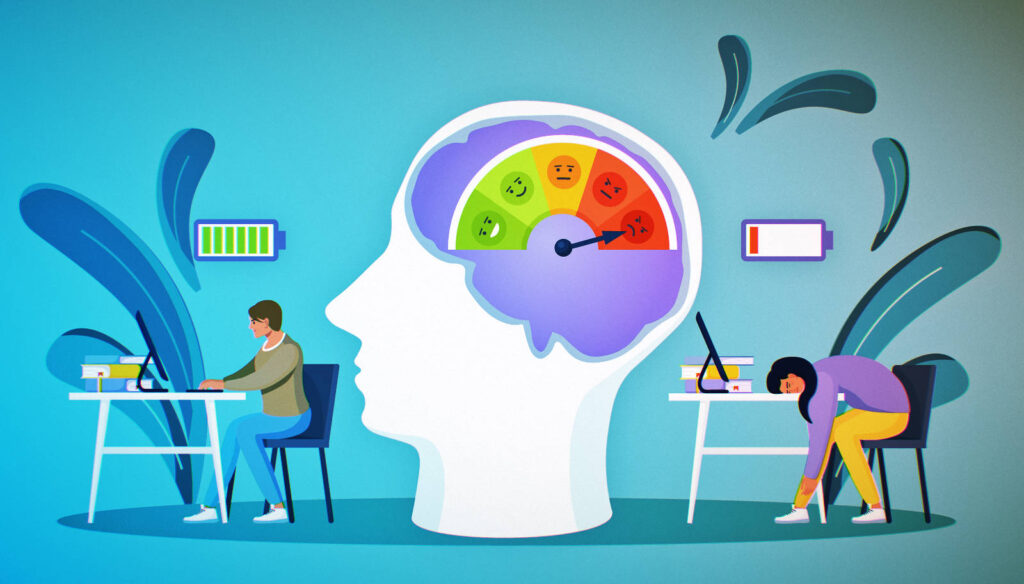
- Missing early signs of burnout
- Managing outputs while losing connection with people
In the short term, results may still happen. But over time, without the relational conditions that sustain people, the cracks begin to show in disengagement and talent attrition.
At work, empathy starts by asking better questions:
- What might be true for this person that I cannot immediately see?
- What might be shaping their experience that is different from my own?
- What support might help them do their best work here?
What leadership looks like in the hybrid era
The good news? Empathy is not a personality trait reserved for naturally warm people. It is a capability that can be strengthened. And in hybrid environments, effective leadership requires something even broader, adaptability.
Leaders must flex their style to meet different contexts, environments and human needs. What works for someone in the office may not work for the same person at home. What motivates one employee may not motivate another. What feels like support to one person may feel like micromanagement to someone else.
The most effective leaders in hybrid environments lead intentionally. They get curious before jumping to solutions, they stop assuming visibility equals performance and they create deliberate moments of connection rather than leaving culture to chance.
The future of leadership does not belong to high IQ alone. It belongs to leaders who can combine high standards with human understanding. Because in the hybrid era, great leadership is no longer defined by knowledge, expertise or technical brilliance alone. It is about creating the conditions for people to succeed, sustainably, over time. And that requires empathy.
In a workplace where visibility no longer equals performance, connection can’t be left to chance. At Monkey Puzzle Training, we provide the tools and training your managers need to lead with both high standards and genuine human empathy.