Why organisations need to learn how to rest
When we wrote our latest book ‘Rest. Practise. Perform.’ we spoke to many inspiring elite sportspeople to gain their insight on what goes into their performance winning strategies. But we didn’t stop there. We also wanted to capture the thoughts of the performance coaches behind elite sports – the people who arguably coach them to excellence.
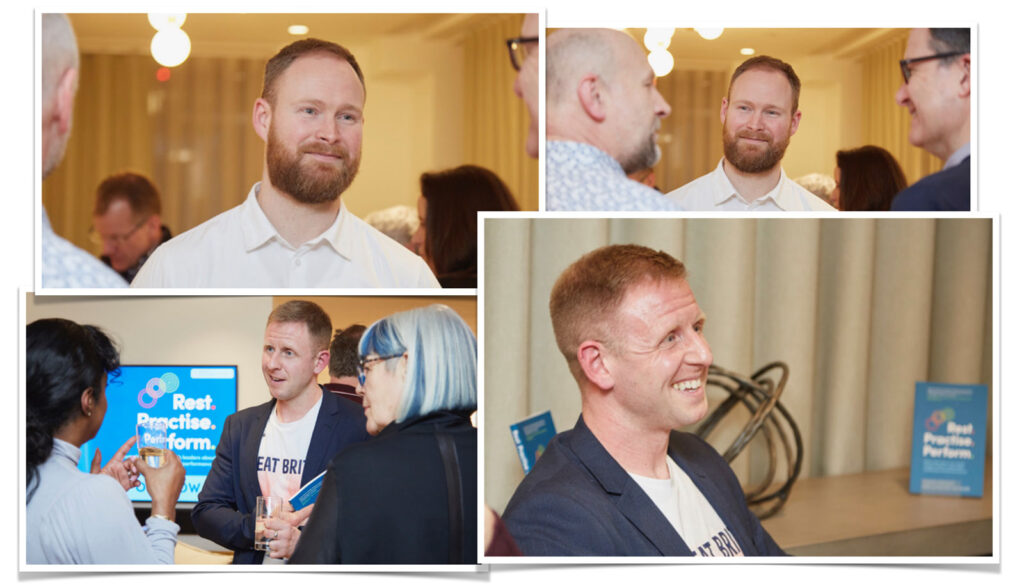
In the first of a three-part series, Jon Cooper joins us in a Q&A on the three themes within the book, starting with Rest. Jon is ideally placed to know exactly what it takes to not only perform, but do it at the highest level. And, like us, Jon also has a perspective on what that means for organisations.
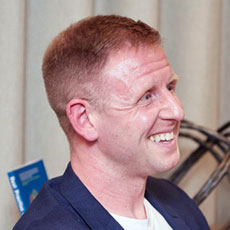
He has been coaching in sport for over 10 years, most recently as a performance coach within athletics and Paralympic-level wheelchair rugby. In the 2020 Tokyo Olympics, Jon coached Aaron Phipps, Team GB Paralympic Gold Medalist, who we interviewed for the book. Since then, the two of them have gone on to develop their own venture ‘Path to Gold’ which is a keynote talk and workshops for organisations based on the journey that took Aaron to the ultimate Olympic achievement.
Let’s start with an introduction from Jon on the work that he does.
What goes into being a performance coach?
It’s about being there to manage the big picture. I focus on the holistic thinking that goes into athletic performance and sporting performance, because they are subtly different. And that involves being a number of different people. That’s being a physical performance coach and also a personal coach that works with the athlete’s ability to deal with situations. I’m also a typical sports coach that can develop techniques and tactics, and a mental skills coach as well. It’s being able to support an athlete in all the different facets that might lead them to being competitive, or achieving their potential within their sport beyond what they think might be capable.
Why do organisations need to place more value on rest?
One of the points made in the book is that well rested people perform better. This is in the face of a performance driven world where some organisations feel that their people can’t be performing to their maximum unless they give 100% all the time. In sport, the body can only achieve a certain amount of work until it becomes more at risk of injury. So, there is more of a clear reason why rest is of value which is why the ‘Rest. Practise. Perform.’ model resonates. Where I think organisations can get it wrong is when they fail to realise that mentally the same thing exists. So, while it’s very easy to see physical fatigue, mental fatigue is less obvious.
What are the signs that we need to take rest?
There is a cognitive load, and there is cognitive fatigue, and the brain can only exert so much effort and load into a task until it requires rest, and it will tell the body to do these things by feeling stressed, by feeling emotions, by feeling fatigue, by being foggy. All these things happen because of mental fatigue.
Why does rest help us perform better?
In sport it’s important to perform and stretch ourselves, and it’s the same in organisations. But in order to learn from that, to develop and gain – you have to have a level of drop-off that allows the body and mind to super compensate and be able to recover and perform at a higher level than it did before. Take learning as an example, you don’t practice a new skill for 10 hours straight and get better. You might have a bit of a go and then take time away from it and then come back. That might be 10 minutes, it might be two hours, it might be a day. It’s the same concept when you’re exerting cognitive effort into a task. If it’s constant without rest, you are basically leading into a state of fatigue, whether that’s mental load or physical.
Why does rest matter in a leadership or line manager context?
If you want your people to be at their best, you need to look after yourself too. If you are tired, or feeling emotional, or feeling stressed and fatigued, which are all mental symptoms of fatigue, it becomes much harder to make clearer, logical, progressive decisions. And if people are relying on you to make those decisions and you can’t do it as effectively as you should be able to, or as you would like to be able to do, then that will have a knock-on effect on everyone else. I’ve often found in sport when you are seen as the coach or leader, you are there to have answers. If you are under pressure, and you’re tired, and you’re emotional you are not always going to respond as effectively as you could if you were making sure that you are as OK as possible – and that means you need to rest too.
There’s a strong employee wellbeing message in the book, that rest is supportive of better mental health. What’s your take on that?
Rest and practise are the foundations in order to mentally perform. And I think if you’re not in a good place, it’s very difficult to mentally perform, and learning the skills between, “I know what to do to achieve success” and “I know how to prepare myself to succeed mentally” are very different skills. What’s really important to know is there’s a time for both. You can’t just only focus on one and not the other if your job is to perform, but it’s about finding time to allow for both.
How can people learn to step back and find the right kind of rest?
This depends a little bit on what it is you need rest from. If it is an emotional fatigue through a very difficult period of competitions, and emotionally you are just a bit spent, there are things that you need to do differently than if you were, let’s say, just overstimulated and you’ve been working so hard that you are mentally fatigued. If things have been very mentally intense then finding things to do that can mentally relax you are really important. For me, walking my dogs, or going to the gym, or doing something that’s mentally much less straining but still feels productive, gives me a chance to replenish some of the cognitive stores while still ticking some other boxes.
If it’s emotional rest because you’ve just been in high pressure situations and riding this emotional roller coaster all the time, it’s more about having conversations with other people you trust and giving yourself a chance to vent and displace some of those emotions. So, you need to come back to a stable level. Enjoyment can also hijack your decision-making and then all of a sudden, you are planning 50 more things than you need to do, because you are riding this emotional high. I think it is just as important to understand that you need to recover from emotional highs as you do from emotional lows. And you might have an unbelievable day, and then the next day, you come in expecting that exact same thing to happen and actually, you are more likely going to feel like you can’t keep up with it. It’s finding your own catharsis that allows you to feel like you are just operating at the level you need to be at.
It sounds like you are saying you have to reset both the physical and emotional dial?
Yes. And I think the same is true as Karen and John talk in the book about physical rest, sensory rest, emotional rest, they are exactly the same. As a coach, leader or manager, you need to be aware of emotional highs and lows. If you’ve had a very good physical day, now it’s about resting to allow for physical recovery. But again, if you’ve had a day where physically, you’ve been put through the wringer, now it’s more obvious that you need a bit of time to recover from that. Whereas mentally, I think some situations have higher risk; if you come in emotionally very charged into a situation like you’re up, you’re great, you’re firing that day, everyone’s going, “Oh, you’re in a good mood today.” You are also at risk of making emotionally charged decisions and perceiving the environment in a very emotionally charged way. And these risk being the worst decisions you could have made because you are letting those emotions kind of hijack you, or you’re letting your ability, or inability to read the situation hijack you. This is also true of being mentally fatigued or low, you can struggle to read the situation or understand the task, which will impair your ability to respond and produce high-quality decisions or work.
So, is the takeaway to remember to rest from the highs as well as rest from the lows?
Yes, and to raise your level of awareness of if you are high, low, or feeling just right and take time to mentally check in with that. If you are recognising that you are feeling tired physically, just take a moment and go, “Okay, I feel a bit tired actually, so I’m going to instigate something that means that I’m going to add a physical form of recovery,” or “Physically, I’m feeling amazing today. Can I make use of this so it becomes an amazing session, or do I let that just happen and then it’s kind of wasted?”. The same is true mentally, check in with how you feel and respond appropriately. That’s why, as a leader or line manager, you need to check in with and understand how both yourself and the people you are responsible for supporting are feeling. We also need to understand, if you are on an emotional high and they’re on an emotional low, this situation has potential for conflict. You need to be able to bring yourself down a bit emotionally, but also need to be able to bring them up a bit. So, it’s about recognising what our emotions are telling us and how that translates into the rest we need.
Discover ‘Rest. Practise. Perform.’
In ‘Rest. Practise. Perform.’ Karen and John draw from extensive research and their deep understanding of leadership behaviours to provide you with a playbook for adopting elite sports’ winning techniques.
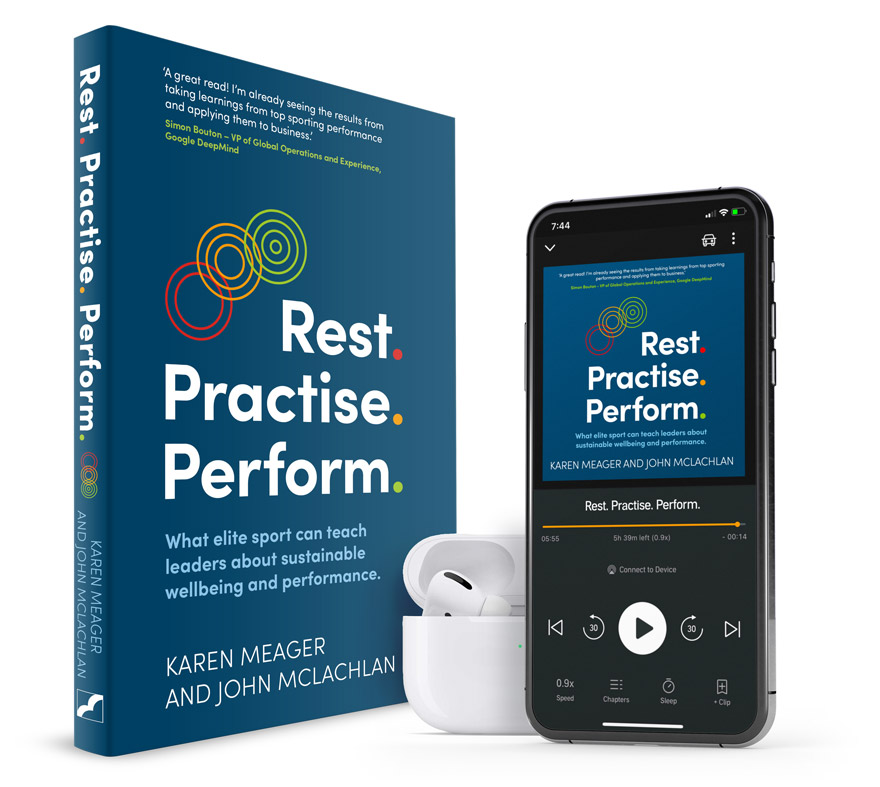
Available to order via Amazon here, and also in audio format, here.
 About Jon Cooper
Discover Jon’s industry and teaching experience, research interests and publications and his work with Solent University, Southampton here.
 About Aaron Phipps
See Aaron’s talk options on his website, from his motivational talk for all “Blood, sweat and wheelchairs”, to Path to Gold delivered alongside Jon. Path to Gold shares the secrets of an elite partnership in the buildup to an unprecedented Paralympic gold medal.