
So much has been written and researched on the topic of leadership, so many models and theories now exist. What makes a good leader or a bad one? It’s a subjective view. We think much of the focus of leadership development misses the point. It’s not about what leadership is, but something many leaders struggle with – how to actually lead.
We want to change this and help to create better developed and capable leaders. It’s imperative too. Our complex world needs better leaders more now than ever.
This article references some of the research for our forthcoming new book, ‘Real Leaders’, the follow-up to ‘Real Leaders for the Real World’, published back in 2014. Much has changed over this time, and yet the challenges facing leaders are very much the same. We’ll share what these are, and introduce you to new models that demonstrate what leaders need to know to develop as the most authentic, and effective, versions of what they can be.
Everyone has the potential to lead
We believe everyone has the potential to lead. Yet those that fail often do so because they were never aware of what they needed to do to get it right. They set out knowing what they wanted to do, the stumbling block was the hardest part – the how.
What we’ve found over our many years of working with leaders in organisations is that people still find it hard to do these things and do them consistently. And this is borne out by our own research. That’s because it’s hard! It’s like saying to be a good leader you must be a perfect human – which, of course, no one can be.
The human conundrum
Often the behaviours that make good leaders can also be the same ones that can hold them back. Leaders, like the rest of us, are only human. They have the same emotional reactions and challenges as we all do – self-doubt, anxiety, personal struggles. These used to be considered undesirable in the often ‘strong and fearless’ leadership stereotypes of the past. But now, thanks to expectations of kinder organisations, where qualities like empathy and compassion are seen as leadership strengths, transparency can help leaders appear to be just as human as the people they lead – and that’s a good thing. Nevertheless, for many leaders, these behaviours still act as challenges towards leadership development.
What our new research told us
The overwhelming message in the original study for our first book was that leaders face a common set of problems and challenges and that there are a set of key traits that good leaders either have or are striving to achieve. Many were plagued with conflicting priorities and communication difficulties and challenged by the dilemmas of life, time and difficult behaviours. We were a little surprised that, in the 2022 study, these themes were very similar. It seems that, while there are many more theories, concepts and buzzwords in the field of leadership, the essence of the reality of leadership, on the ground in organisations, has not changed.
So, how can leaders develop in a way that enables them to overcome these challenges? How can they become better leaders?
The power of self-awareness
We believe that people are human first and foremost and any development of leadership style must be grounded in who you are. You then adjust and tweak your attitude and behaviour from this base so that your leadership style becomes more congruent with who you are and, frankly, is just easier to do. This congruence will also make a world of difference to the people you are leading, the quality of your work and your ability to deliver.
The Real Leaders Model
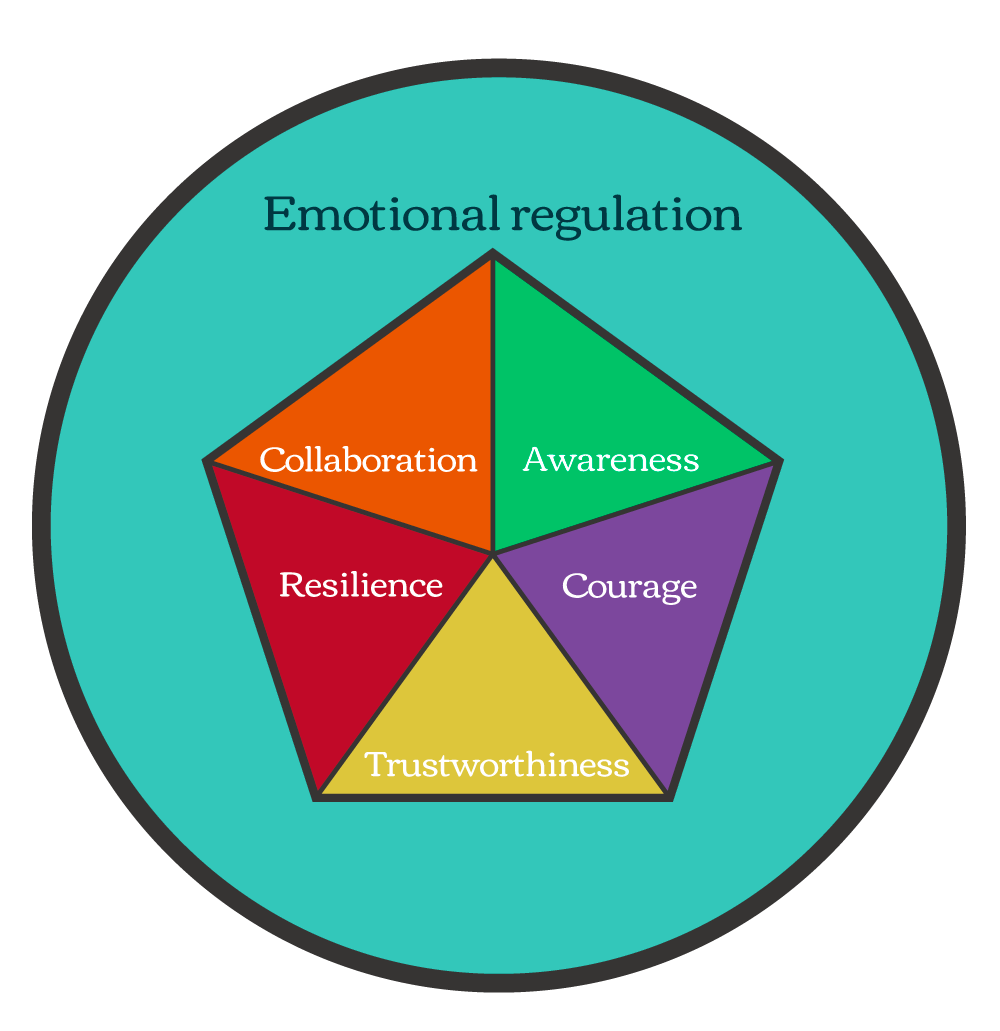
The Real Leaders Model was developed from our new research. It focuses on five key traits that leaders in our research admired, were looking to develop or felt were keys to their success. The key traits identified are awareness , courage , resilience , trustworthiness and collaboration . The common thread is that each focuses on acquiring the ability to do something that leads to becoming a better leader. These are defined more specifically in the first chapter of Real Leaders.
The Real Leaders Model
© Karen Meager and John McLachlan
Emotional regulation – how to make new traits your own
While you may be able to do all of these traits in some circumstances, some of the time, doing them consistently and with congruence requires something else: emotional regulation.
Step back to 2014 and the first edition, hardly anyone was talking about emotional regulation in leadership circles. Now, the term is more commonly used, demonstrating how far the world has come in understanding the emotional underpinnings of everyday behaviours. It’s also the reason why, in the real leaders model, emotional regulation encircles all the other traits. Without it, leaders cannot make these traits their own and model them with congruence and a degree of ease. This is why we consider it’s likely to be the most essential piece of leadership development you will ever undertake.
Of course, to develop as a leader will also involve some degree of change. We’ve developed a model for that too. A mainstay of the book, we’ll introduce this here briefly too.
The AMC Behavioural Change Model
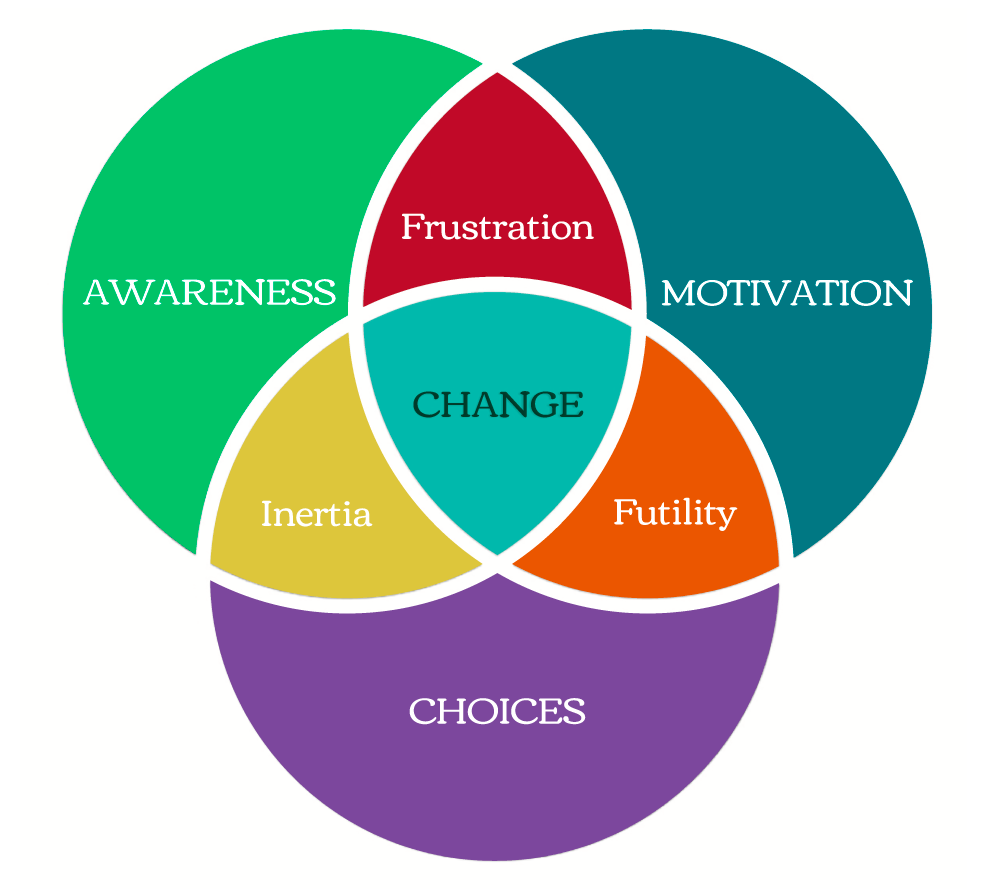
awareness + motivation + choices = CHANGE
You need all three of these to effect deep-rooted change.
Awareness: You need to make clear to yourself what specifically you need to change. This may seem obvious but often people try to change something without a full understanding of what specifically needs to change, even if they’ve had feedback from other people about it.
Motivation: The key aspect of motivation is that it must be truly motivating for you, personally, to be effective. Think about how this change will help you. Will it make you more impactful? Able to complete things faster? Get you more recognition for your work? Will it make work more enjoyable? Improve the quality of what you do?
Choices: You might have awareness of what needs to change and be really motivated to change but have no idea how to do it. What’s more, people who do change successfully recognise that there’s always more than one way to do something. You need choice. To have choice you need a range of options that are appropriate to the situation and congruent with your style and skills.
The AMC Behavioural Change Model
© Karen Meager and John McLachlan
In conclusion
The challenges we as leaders face are fairly consistent over time and shared. The world is ever more complex but, the things that can impact on our ability to develop as leaders haven’t changed in reality. The key to better development is greater self-awareness of our human selves. The more self aware we become, the more we are able to identify what we need to work on to improve our leadership skills and ultimately make the difference our organisations and the world itself needs.
About Real Leaders
Real Leaders: A Practical Guide to the Essential Qualities of Effective Leadership is published on November 10th. Organisational Psychologists Karen Meager and John McLachlan. Unpack and examine all the psychological and behavioural traits that characterise many great leaders. Through an accessible mix of pragmatic and practical guidance, they demonstrate how to adopt and adapt these common attributes and develop your own authentic leadership style.