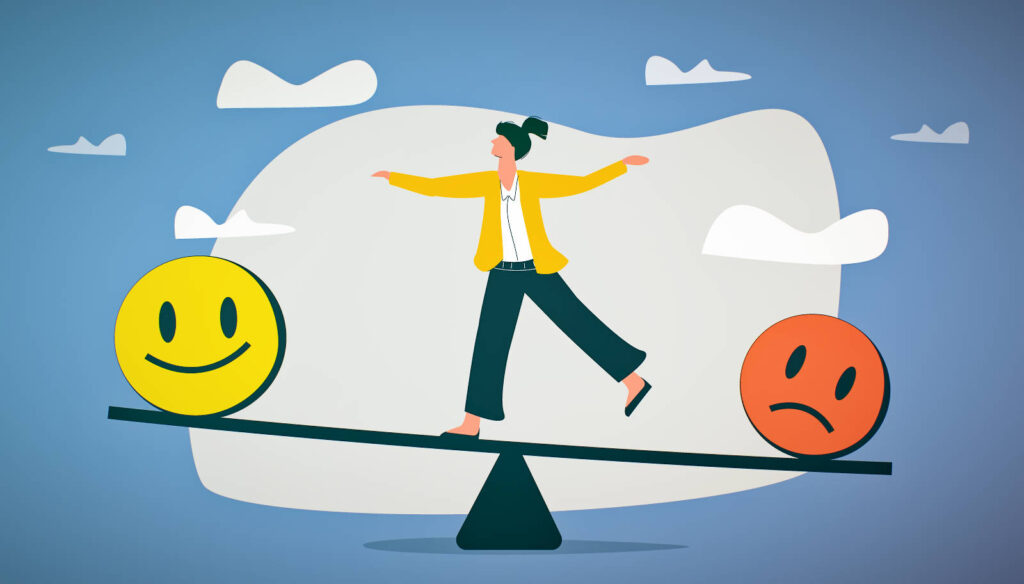
While advances in technology grab the headlines, our workplaces are still overwhelmingly human. And as leaders, colleagues and co-workers, we all come with that most human of traits – our emotions. Our emotions can inspire, motivate and engage – but they can also have a downside.
In organisations and in life, our emotions can cause disproportionate reactions and put working relationships under strain. Being human, we care about things, often deeply, and when these are questioned or threatened it’s often the basis of a reaction we’d rather not have. That’s because in many cases our emotions aren’t grounded or, in other words, emotionally regulated.
Emotional regulation – it’s not just for leaders
We think emotional regulation is likely to be the most essential piece of development a leader can ever take. It’s how you become inspirational, consistently effective and resilient. But it’s more than a leadership skill – it’s a life skill. Everyone can benefit from developing strong emotional regulation.
This article looks at what emotional regulation is – and what it’s not. We also share our tips for how to develop your own state of emotional regulation, based on some of the content in our latest book, Real Leaders: A Practical Guide to the Essential Qualities of Effective Leadership.
What it is
Emotional regulation is the degree to which the emotions you are expressing in any given situation are appropriate to what’s going on. But, as we all know, raw emotions can send us more deeply into that situation. At work, a colleague might be upset, you become upset in response, they are upset at your reaction and get more upset, and so on. What’s more, many of us are more emotionally charged as we adjust to new work patterns post-pandemic and manage cost of living challenges – only adding to the ‘heat’ or the pressure we feel under.
And what it isn’t? Despite the term ‘regulation’ it’s not about being completely in control of your emotions or banning them completely like Mr Spock. Emotions are very powerful and suppressing them would be dangerous and only be possible by being a corporate robot – and we have enough of those already.
The pros of emotional regulation
Emotional regulation allows us to behave in a consistent way as ourselves, and that helps others to engage with us more clearly and more easily because they understand where we’re coming from. It also allows people to think more broadly and more long term rather than react in the minute. Emotionally regulated people are rounded, grounded and brilliant in what they bring to the workplace, helping to create a psychologically safe environment. They can listen carefully, appreciate multiple points of view and move ideas forward. All of which makes others feel more comfortable around them.
Your emotional thermostat
A good metaphor for emotional regulation is to think of it as a thermostat in your body and brain. Your way of adjusting or dialing down your reaction to things happening around you. You want your temperature – and your behaviour – to be appropriate to the situation. No one wants to fly off the handle – or be indecisive, but they might have emotions that are either too strong, or not strong enough to make sense of what is happening.
Building your emotional regulation skills
We are hard wired from birth to respond in certain ways – with fight, flight or freeze responses to threats or danger. Often the problems that unregulated emotions bring is that our responses fire automatically – whether the perceived threat is real or not. The good news is that we can change these deeply embedded responses.
Our suggestion is to work with some of these techniques, the ones that feel most beneficial to you. The key to success is in building them into your natural habits and behaviours. With practice they will become a natural part of your routine.
Check in with yourself in the moment: Ask yourself is this appropriate to what’s happening here? If not, stop, take a deep breath and decide to react differently. Sometimes this means saying ‘I’m not in the right place to deal with this right now, I’ll come back to you.’
Controlled breathing: Breathing exercises are good at any time, you don’t have to wait for your emotions to become triggered. Your breathing is hot wired to your emotions. You can use breathing exercises to release your repressed emotion. Try our breathing exercise audio – it’s free on our website.
Spend time with people you feel good around: The chemicals within our brain adjust depending on who we are with. If you are with people who make you feel uncomfortable or under threat, your brain will adjust, ready for defence or attack as required. Of course this isn’t always an option in our working lives, so spend time with people who give you the right energy when you can.
One to one personal development: Having a good coach is like a super fast highway to emotional regulation. Not only will working with a coach help leaders develop their self-awareness, many robust studies estimate an ROI for organisations at more than 500% (e.g. Cartwright & Cooper 2009). Want to find the right coach for you? Our guide will help.
The above tips are covered in more depth in Chapter 2 of Real Leaders: A Practical Guide to the Essential Qualities of Effective Leadership.
In conclusion
Becoming triggered by all the emotional chaos around you is exhausting. But being emotional is part of being human, and as long as the workplace is populated by humans, our emotions will be evident in our behaviours at work. With emotional regulation you’ll have the control you need while also being real and authentic. And this will benefit those around you who will follow your lead because they can see you are in charge of yourself. Great leaders – and the brilliant people in the teams they lead – need emotional regulation.